


QHY 30mm aperture, 130mm focal length miniGuideScope
A lot of people who undertake astrophotography, whether they are beginners or seasoned amateurs, opt for high-quality small aperture, short-medium focal length telescopes such as BAADER APO 95/580 CaF2 Travel Companion (#2300095, € 3850,-) or the 8" Celestron Rowe-Ackermann Schmidt Astrograph. These telescopes will give a relatively wide field of view allowing images to be taken of spectacular large celestial objects such as the North American Nebula, Andromeda galaxy, Orion nebula, Pleiades open star cluster, and many many more.
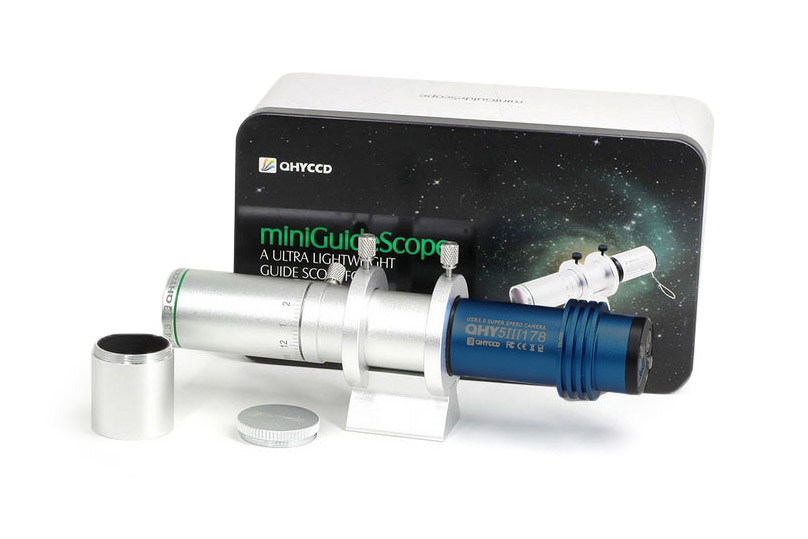
miniGuideScope with dew shield, objective cover, mount, and aluminum storage box. The QHY camera is not included.
Guiding is essential for taking long-exposure images of such celestial objects. Long gone are the days when your guide scope was a telescope that would be similar in focal length as your imaging scope and you would guide by looking at a star through a high power cross-hair eyepiece making rapid adjustments manually! Nowadays with high resolution, sensitive image sensors and advanced software imaging algorithms that allow subpixel star centroiding, smaller aperture shorter focal length telescopes can be used for guiding. If you want a lightweight and compact guide scope to complement your imaging setup QHYCCD's miniGuideScope (mGS) could be just for you. The mGS is available as OTA only and also as OTA with a mounting bracket.
The telescope: size and weight
The mGS comes in a sturdy aluminum container with foam inserts to keep the telescope safe during transport or storage. The outside of the telescope body and its finderscope dovetail mount is finished in an attractive stylish matt silver finish. The interior of the telescope is painted matt black to minimize internal reflections.
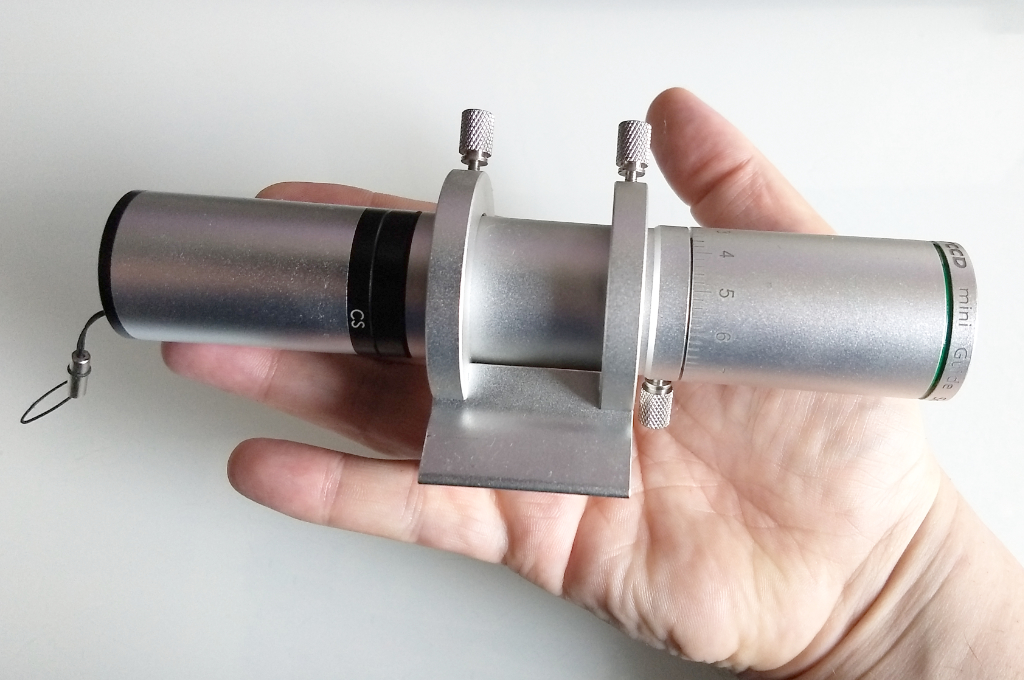
The mGS being handheld showing how compact the unit is.
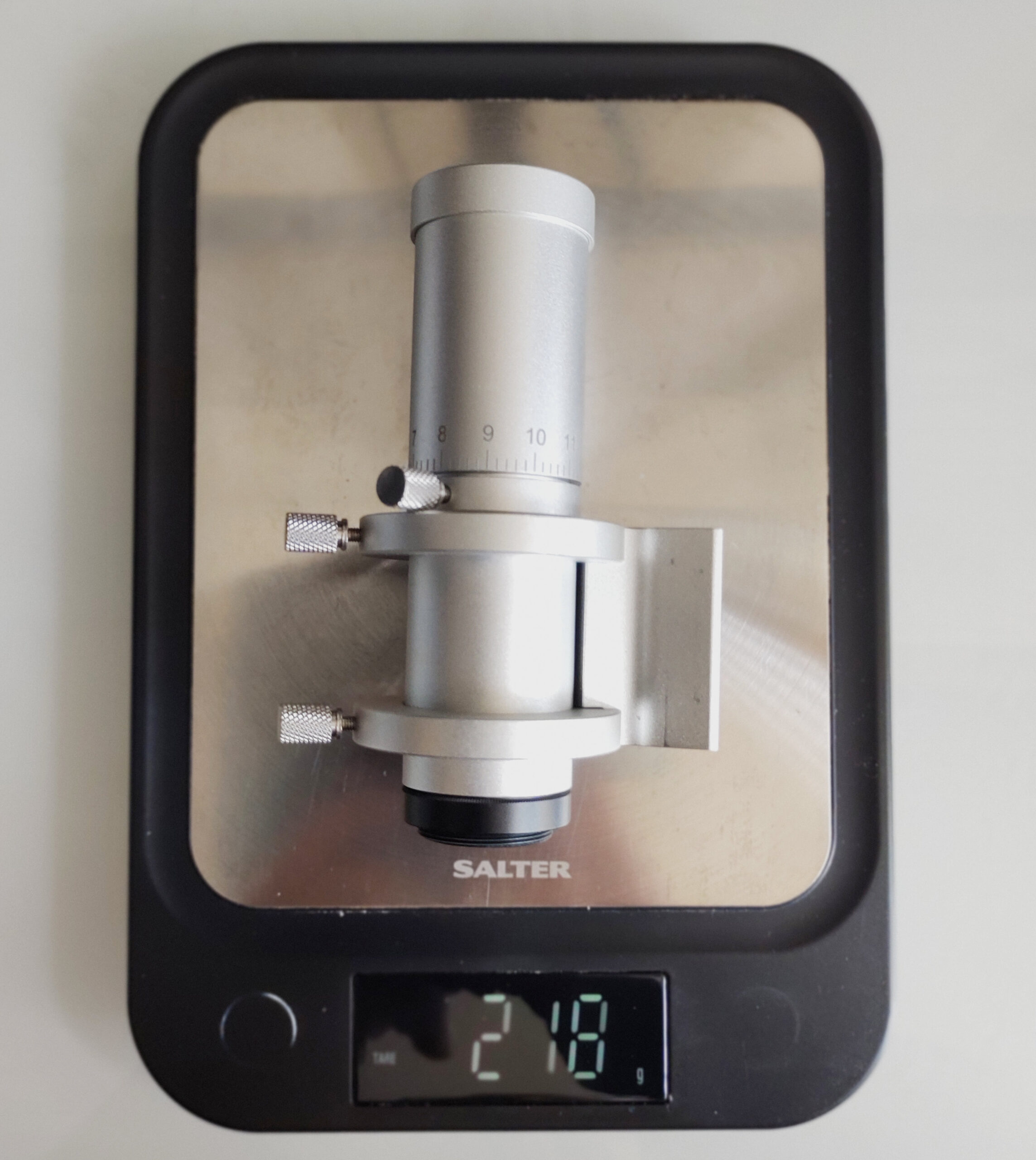
mGS and mount weigh less than 220g
The scope itself is 31.6mm diameter (similar to a 1.25" eyepiece barrel) and is small in length at only ~115mm with the focuser fully inward. With a QHY5P-II-M camera attached and focussed ready for guiding (as shown) the length of the overall scope and camera combination was only 170mm (without dew shield). The OTA itself weighs a mere 118g without a dew shield and camera attached. With its mini-dovetail mounting bracket, the complete unit is still lightweight at just ~220g, and with a small guide camera such as QHY5-II series attached ~260g. Its small, compact, and lightweight form factor means that it is ideal for use on set-ups where the (additional) weight of a larger guide scope and associated accessories may be an issue. Furthermore, the mGS is ideal for long exposure astrophotography with small (ultra-)portable tracking platforms (see photo for an example set up).
Camera attachment:
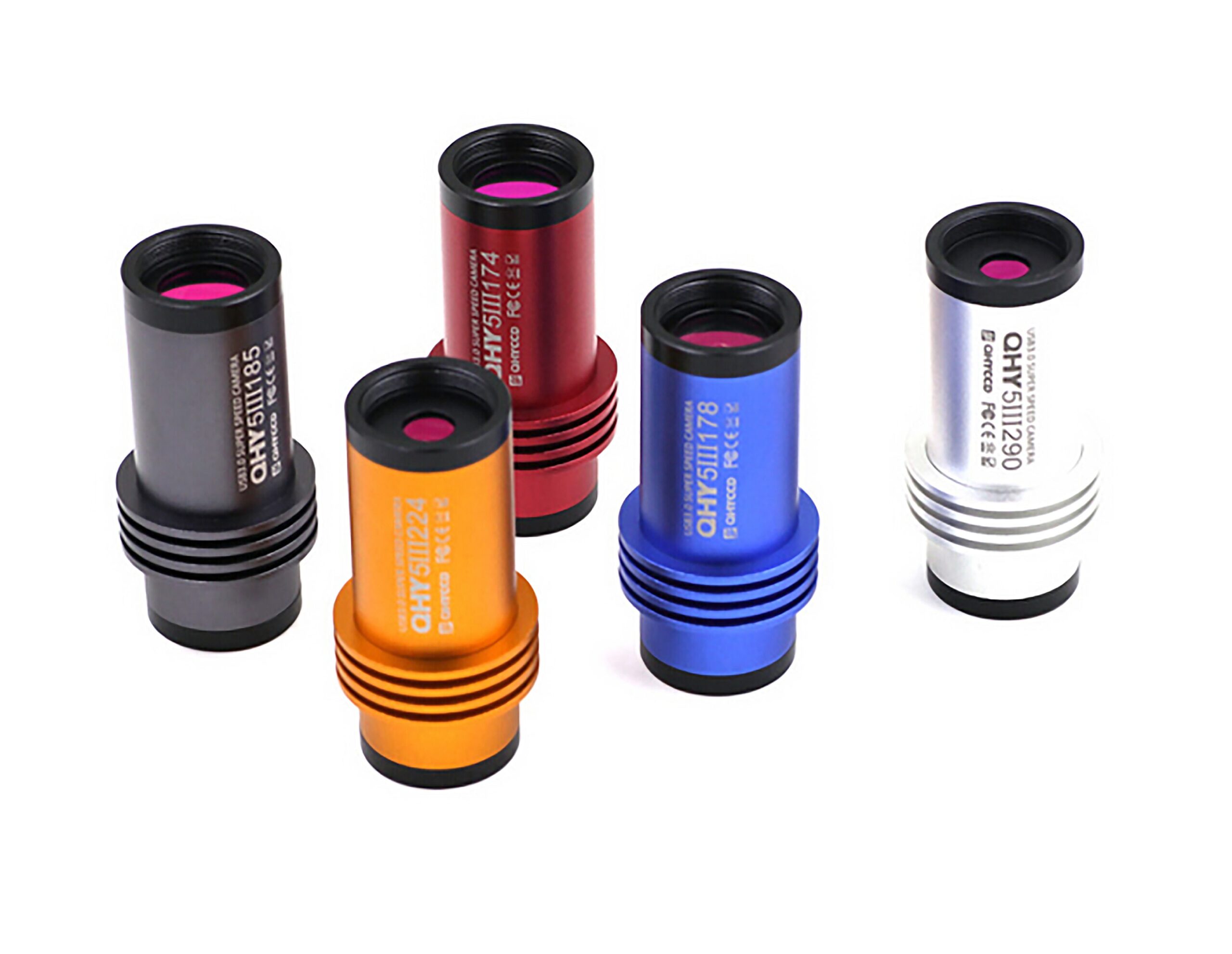
On the rear of the telescope, there is a male CS screw thread for direct camera attachment and many guide cameras use this type of mount. The guidescope is compatible with the current QHY Series II and Series III cameras such as the QHY5L-II-M, QHY5-III-178 and QHY5-III-290 as well as a range of other cameras using the Cs lens thread attachment. This mGS is also a great match for StarAid Revolution Standalone Autoguiding - Revision B (#1485001, € 890,-) which works best with guide scopes with focal lengths of 100mm-150mm. In this case, the black threaded adapter at the end of the mGS must be replaced with 1485010, StarAid 1.25" nach C-Mount Adapter ring, 5mm optical height. For those doing astrophotography using a camera tracking platform and a DSLR/Mirrorless camera, the combination of the small lightweight mGS and the "without-a-pc operation" of the StarAid Revolution for guiding and camera control contribute towards a truly portable grab-and-go astroimaging system.

The example set up showing a QHY mGS mounted on a portable camera tracking platform for DSLR wide-field imaging
Objective end and focus:
Moving towards the objective end of the telescope, the mGS uses a high-quality 30mm aperture doublet achromat lens with a focal length of 130mm (f/4.3) and features a broadband anti-reflective coating. Focusing is achieved with a simple screw-twist of the end barrel of the OTA and a single focus locking screw allows you to lock the focus position. The telescope can focus from 1.5m - ∞ and focus position indicator markings assist in helping to achieve focus and also refocus positioning if the camera has been removed or changed. A small aluminum screw-on dew shield completes the objective end of the mGS.

Mounting:
The mGS mounting bracket features two tube rings each with a plastic-tipped locking screw to secure the OTA in place. The inside diameter of the tube rings is just slightly larger than the guide scope tube so no positional adjustment of the guide scope can be done. However, the telescope's large field of view means this is not an issue as a suitable GuideStar can be located in just about any part of the night sky. The rings are attached to a mini dovetail base that allows it to be attached to a wide range of telescopes that feature this common type of finderscope/guidescope shoe-bracket attachment. For telescopes that either require such a shoe or if you need an additional bracket, we offer our Baader Standard Base - for MQR III & IV & for V-Bracket, and for all Vixen-style finderscope mount bases (#2457000, € 28,-) , which can be attached to most telescopes with tubes 130-400mm in diameter, and features two locking screws for secure guide scope attachment. The mGS base also features a standard 1/4" UNC tripod threaded hole so that the mGS can be attached to e.g. telescope tube rings.
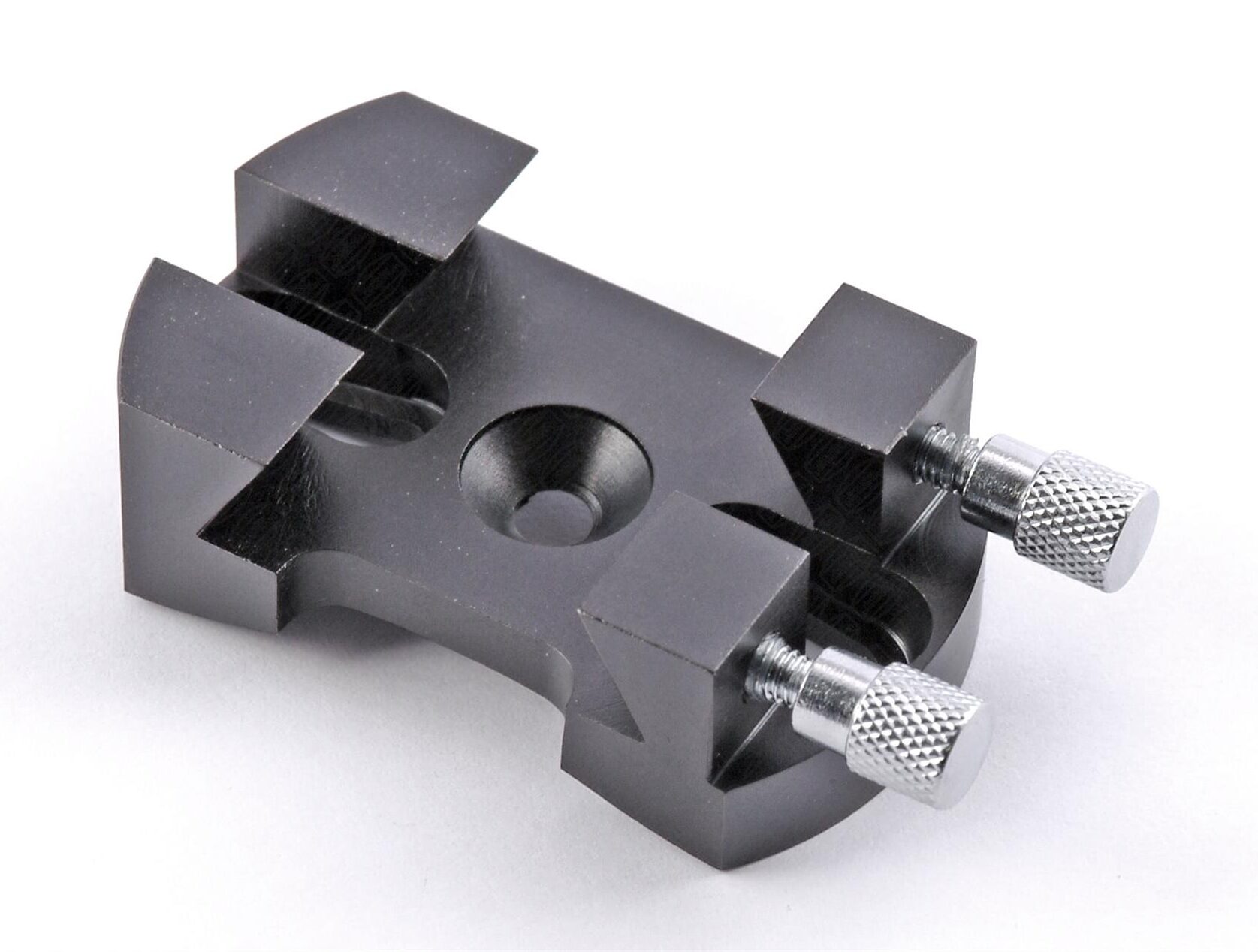

The base of the mGS bracket showing the 1/4" UNC tripod thread
Field of view:
With the mGS's short 130mm focal length, what field of view will you get on the sky? That will of course depend on the camera and its sensor being used.
However, to give you some idea of FOV, below we present a table that lists a few of the current popular guide cameras along with the sensor pixel array, pixel size, and the resulting pixel scale and field of view in degrees.
| Camera | Sensor Array
(pixels) |
Pixel Size
(µm) |
Image Scale
(" / pixel) |
F.O.V
(deg) |
| QHY 5-III 174M / ASI174 | 1920x1200 | 5.86 x 5.86 | 9.30 x 9.30 | 4.96 x 3.10 |
| QHY 5-III 178M | 3072x2048 | 2.40 x 2.40 | 3.81 x 3.81 | 3.25 x 2.17 |
| QHY 5-III 290 / ASI290 / StarAid Revolution | 1920x1080 | 2.90 x 2.90 | 4.60 x 4.60 | 2.45 x 1.38 |
Below, we have shown this camera F.O.V's superimposed on a celestial image of Messier 31 (Andromeda Galaxy) to give you a more "visual-orientated view".
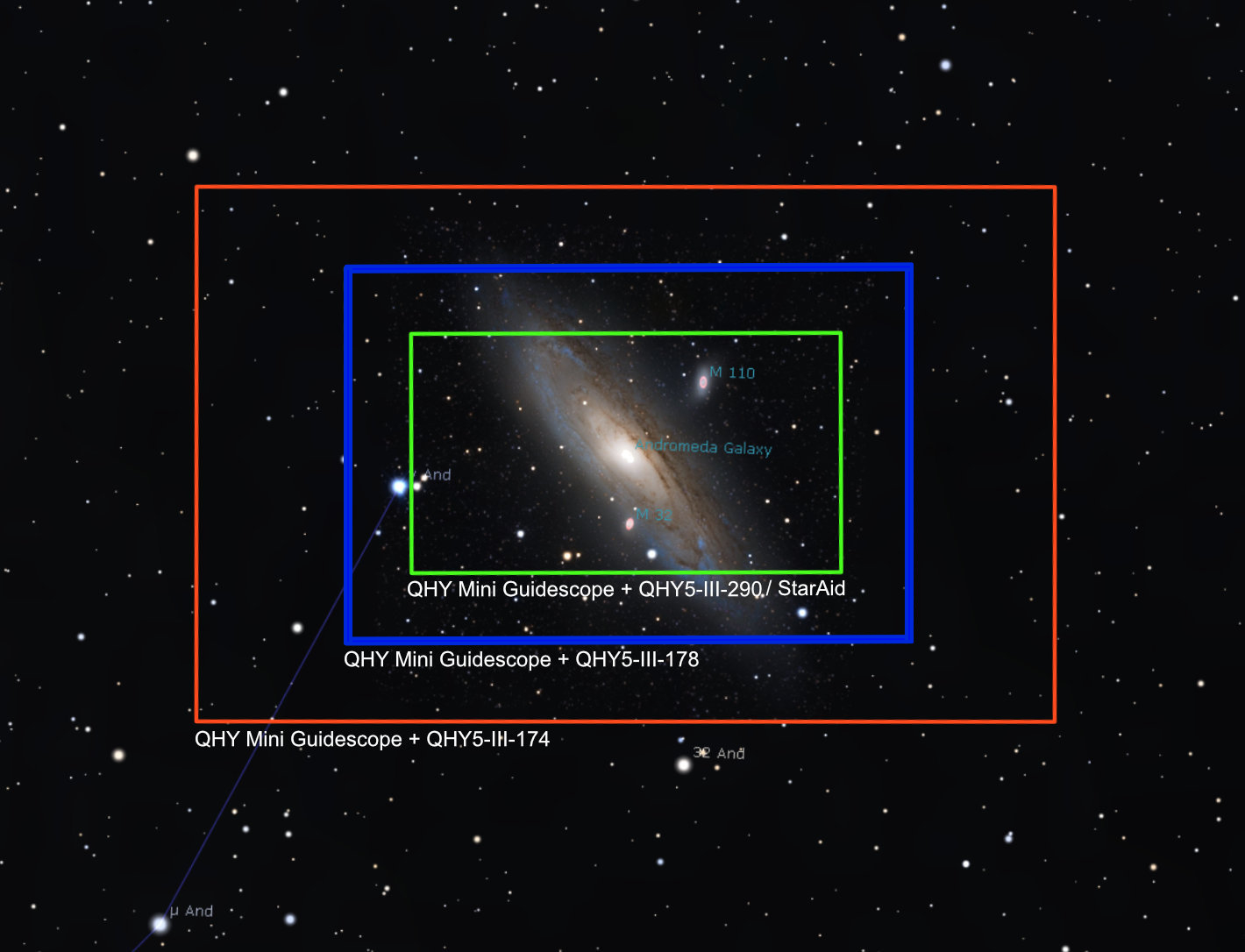
mGS field of view with a selection of popular sized sensors used in guide cameras.
In summary, QYH's miniGuideScope is a high-quality, small and lightweight guide scope that is easy to set up and use and can be used with many imaging setups. With it, and a compatible camera, it can help you obtain long exposure images of celestial deep sky objects.
QHYCCD also designs and manufactures a wide range of high-quality, excellent performance, and reliable cooled CMOS and CCD astronomical imaging cameras ranging from entry-level up to professional astronomy grade that is used in research programs. To complement their cameras they also produce dedicated accessories including filter wheels, off-axis guiders, and adaptor kits. You can find out more about QHYCCD and its product catalog here.

